
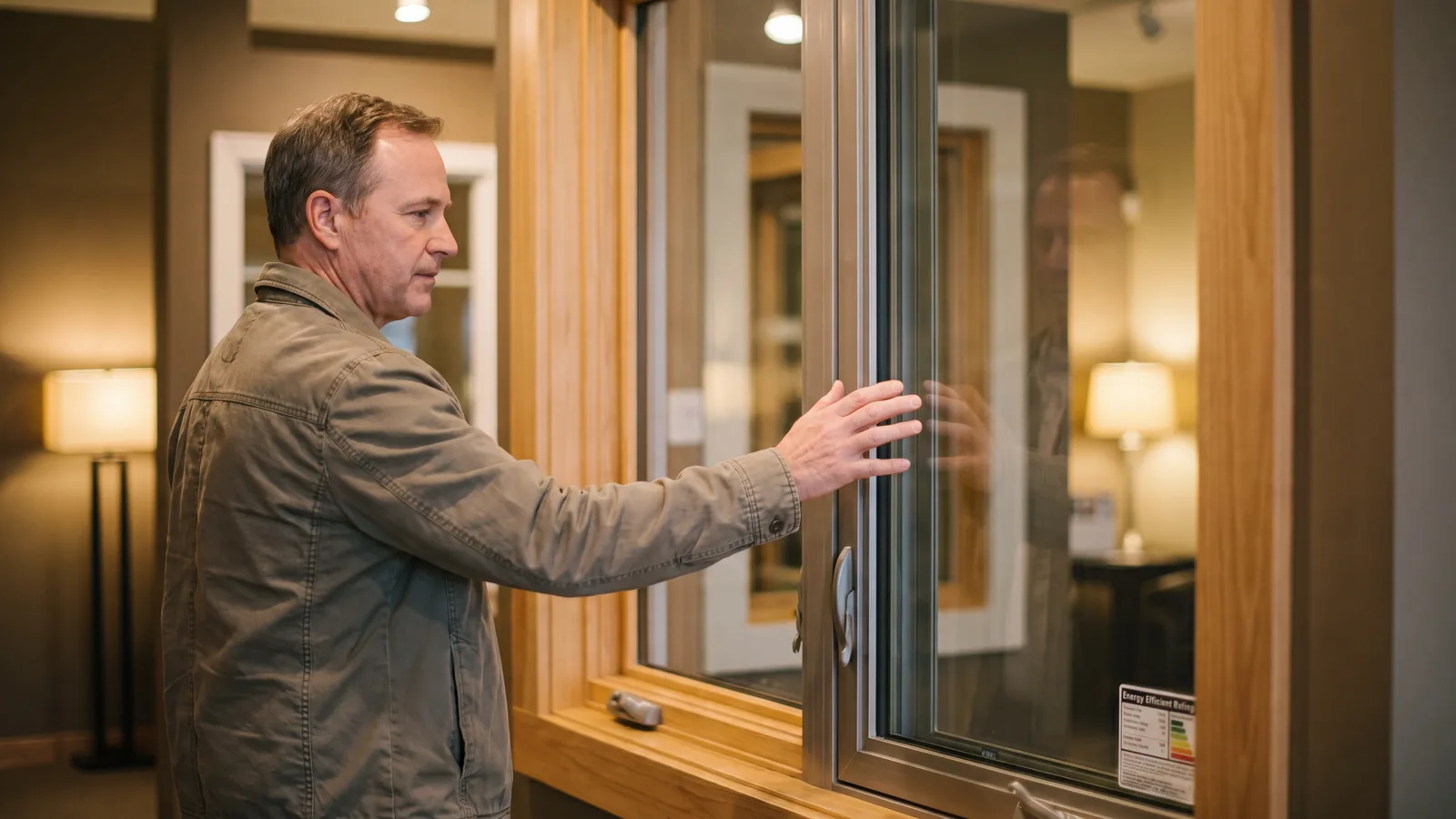
Energy efficiency still sells windows. The federal tax credit that most contractor marketing leaned on to sell it does not exist any more. The Energy Efficient Home Improvement Credit, Section 25C of the Internal Revenue Code, was terminated for property placed in service after 31 December 2025. If your landing page, your consultation script, or your price presentation still tells a homeowner they will get a federal credit, you are promising money the homeowner cannot claim, on the one subject where being wrong costs you the customer and invites a complaint.
Correction note, 2026-09-20
This article previously instructed contractors to present the federal Energy Efficient Home Improvement Credit as a benefit the homeowner would receive, and to quote a $600 annual window figure in the price presentation. Legislation enacted in July 2025 terminated that credit for property placed in service after 31 December 2025, so the sales guidance has been rewritten around state and utility programs and around what an installer can responsibly say about tax outcomes.
What changed
For the 2023 through 2025 tax years the Energy Efficient Home Improvement Credit covered 30% of the cost of qualifying improvements, capped at $600 a year for exterior windows and skylights and $1,200 a year across most categories combined. That is the framework nearly every window contractor built their incentive talk track on.
A federal law enacted in July 2025 ended it. The credit is not allowed for property placed in service after 31 December 2025, and the Internal Revenue Service instructions for the residential energy credits form say the same thing in a section headed termination of credits. There is no phase down and no transition rule for jobs sold before the cutoff and installed after it. Placed in service is the test.
The first move: strip the federal credit out of everything
This is an afternoon of work and it is not optional. Go through every surface where the claim can appear:
- Landing pages and program pages, including any hero line or badge that reads “federal tax credit available”.
- Paid ad copy and creative, including image overlays and video captions where the claim is burned into the asset.
- Email and text nurture sequences, where an old credit reminder can keep sending for months after the page is fixed.
- Printed leave behinds, price presentation slides, and the good better best sheet the rep puts on the kitchen table.
- The consultation script itself, which is where the claim survives longest because nobody edits a script that lives in a rep's head.
Two details worth getting right. First, do not simply delete the topic and leave a hole in the value stack: replace it, using the sections below. Second, if you sold jobs on the strength of the credit and installed them in time, help those customers finish their paperwork. That is the goodwill that survives the change.
What is still worth talking about
State energy efficiency programs
Several states run their own credits, rebates, or efficiency programs that are independent of the federal credit and are unaffected by its termination. Amounts, eligibility, and application windows vary by state and change on their own schedules.
Utility rebate programs
Many electric and gas utilities pay rebates on qualifying window installations, usually per window or per project, and usually tied to a product performance rating. These are the incentives homeowners are most likely to actually receive, because they are administered locally and paid on a short cycle.
Property tax treatment
Some jurisdictions exclude energy efficiency improvements from property tax reassessment. It is a smaller number than a rebate, but it is worth knowing for the homeowner who asks whether the upgrade raises their assessment.
The operating cost story, which never expired
The performance argument for a better glass package is not a tax argument. Certification criteria for residential windows are published by climate zone, and a homeowner replacing failed single pane units is buying comfort, condensation control, and noise as much as heating cost. None of that depends on a credit.
How to check a program before you mention it
Before any program enters a script or a piece of copy, open the administering body's own page, confirm the program is open, confirm the current amount, confirm the product criteria, and note the date you checked. Keep that list in one place with a named owner and a quarterly review. The federal credit is the proof of why: a program that has been stable for years can end in a single bill.
How to run the consultation now
Stage 1: discovery
Ask about energy bills during the walk, the same as before. The question still opens the value conversation:
“Walk me through what your average winter heating bill looks like, and whether you have looked into any efficiency rebates from your utility.”
Most have not, and the utility program is now the specific thing you can point them at. Sales script architecture here.
Stage 2: education
When you walk the glass packages, talk about certification and performance rather than tax treatment: which package is certified, what the rating means in this climate zone, and which local rebate the certified package qualifies for.
Stage 3: pricing presentation
Present the price as the price. If a rebate applies, name the program, name the amount, name who pays it, and name the timing:
“Recommended option is $24,000 all in. The package qualifies for your utility's replacement window rebate, which is paid directly by them after we file the install documentation. That is their program and their decision, not ours, so I will not build it into your price. I will file the paperwork and show you exactly what was sent.”
Specific program, specific payer, specific timing, no arithmetic on the homeowner's tax return.
Stage 4: post install support
Send a clean paperwork package after install: the certification documentation for the product actually installed, the rebate application pre filled where possible, and a copy of the invoice formatted the way the program wants it. This is operational work most contractors skip, and it is the part customers mention in reviews.
The marketing leverage
Customers who actually receive a rebate talk about it, in reviews, in referrals, and at the fence line. The benefit of helping them get paid compounds for years, and unlike a federal credit it does not depend on legislation staying still.
The compliance line you do not cross
Do not make tax representations at all
With the federal window credit gone, the safest posture is the simplest one: you are a window contractor, not a tax preparer. Confirm what the product is certified as. Do not tell a homeowner what they will or will not be able to claim on a return, and do not let a rep improvise it. Point tax questions at the homeowner's own tax professional and move on.
Do not quote a program you have not just checked
Utility and state programs change on their own calendars. Quote the current published amount or quote nothing. Citing a lapsed or higher historical amount is the same error this article is correcting, one level down.
Do not let an incentive become the offer
“Free windows after the rebate” messaging crosses into deceptive territory and draws both regulator and plaintiff attention. Window replacement is not free. A rebate offsets part of a real price.
The marketing message that works now
- “Certified glass packages, with the performance rating for your climate zone shown on the quote.”
- “We check your utility's current rebate program before the appointment and file the paperwork for you after install.”
- “We do not quote tax outcomes. Your accountant decides what applies to your return.”
That is a narrower promise than the one the industry has been making for three years, and it is one you can keep on every job.
31 December 2025
The last date a window could be placed in service and still qualify for the federal Energy Efficient Home Improvement Credit. Anything installed after that date does not qualify, regardless of when it was sold.
Sources
- Internal Revenue Service, frequently asked questions on the 2025 modification of Section 25C and related credits, which states that the credit is not allowed for any property placed in service after 31 December 2025, under the law enacted 4 July 2025.
- Internal Revenue Service, instructions for the 2025 residential energy credits form, whose termination of credits note says expenditures and property placed in service after 31 December 2025 cannot be claimed.
- Internal Revenue Service, Energy Efficient Home Improvement Credit, the source for the historical limits described above, including the $600 cap on exterior windows and skylights and the $1,200 annual aggregate.
- ENERGY STAR certification criteria for residential windows, doors and skylights, which sets the performance requirements by climate zone that the product conversation should rest on.
Ready to talk numbers on your own pipeline?
On the strategy call, we'll lay out the plan we'd run for your business and talk through how it fits your market.
Final thought
The federal credit was a convenient prop, and props get taken away. What is left is the part that was always doing the work: a certified product, an honest price, a local program you checked this month, and paperwork filed on the customer's behalf. Strip the dead claim out of every surface this week, put a named owner and a quarterly review on the incentive list, and keep tax opinions out of your contractor's mouth. That posture survives the next change in the law too.
Tagged