
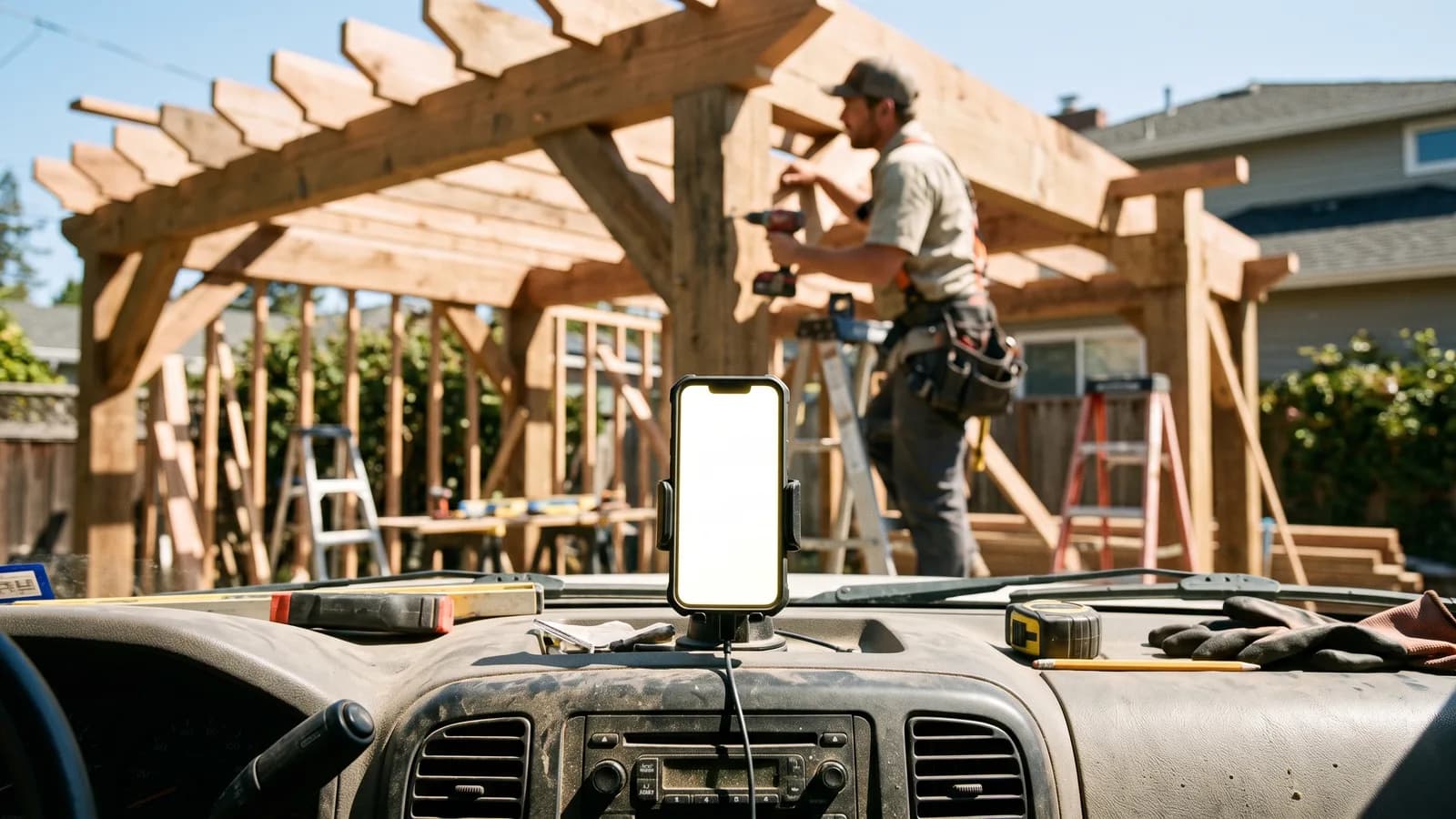
A small pergola operation often has the same two or three people building, measuring, and answering the phone. That overlap means the busiest install hours, exactly when a crew is up on a ladder setting a beam or a rep is mid-walkthrough with a homeowner, are also the hours when an inbound call is most likely to ring through to voicemail. A missed call during those hours is rarely a neutral event, it is usually a lead who is already dialing the next name on their list.
This gap is easy to underestimate because it never shows up as a line item in the numbers. There is no clean record of a lead who called, reached voicemail, and quietly moved on to a competitor, it simply looks like a lead that never converted, and most dealers assume the fault was pricing or timing rather than a phone that rang unanswered during an install.
Why pergola installers miss more calls than they realize
Install days do not leave much room for a phone to be answered properly. Hands are on lumber or aluminum extrusion, ear protection is on, or a rep is standing in a backyard walking a homeowner through material samples and cannot step away mid-conversation to take an unrelated call. None of that is a staffing failure in the usual sense, it is simply what a hands-on install business looks like day to day, but it means the phone is unattended for real stretches of the busiest, highest-lead-volume hours of the week.
What gets lost when a call goes to voicemail during an install day
A caller who reaches voicemail during peak season rarely leaves a message and waits patiently. More often they hang up and call the next installer on their list, especially if that search happened to turn up three or four options in the same few minutes. The lead is not lost because the offer was wrong or the price was too high, it is lost because nobody picked up, which is a far more expensive kind of loss because it is entirely preventable and has nothing to do with the actual product or pitch.
The effect compounds during exactly the weeks a dealer can least afford it. Peak season already stretches crews thin, which means the missed-call problem and the highest lead volume of the year arrive at the same time, and a dealer without a coverage plan is losing the most leads during the exact window when the most leads are available to lose.
Covering inbound calls without pulling a crew member off a job
This is exactly the kind of gap a lead-response service built around answering and booking is designed to close for a small crew that cannot staff a full-time office role. The fix does not require adding a full-time office role to a small operation. A shared line routed to whoever is available that hour, a dedicated answering service during install-heavy weeks, or an AI receptionist that captures the caller's basic details and gets a callback scheduled can all close most of the gap without pulling a builder off a ladder. What matters is that something answers consistently, not necessarily that a specific person answers every single call personally.
Coverage beats perfection
What a caller expects in the first thirty seconds
The same coverage gap shows up after the sale too, not just before it. A customer calling about a motorized roof that will not close properly deserves the same reliable answer a new lead does, and clear warranty communication set at the time of install makes that post-sale call easier to handle well, since the caller already knows roughly what to expect before anyone picks up.
A caller comparing installers during peak season is not expecting a detailed product conversation on the first call, they want to know someone is actually there, that their project is being taken seriously, and that a real next step, a callback or a scheduled consultation, is coming soon. Meeting that basic expectation quickly matters more than a polished pitch delivered an hour later once a crew member finally gets a break, since the buyer has usually made up their mind about who feels responsive within that first short exchange.
A caller who leaves a message with an answering service or an AI receptionist should hear back within the hour whenever possible, not at the end of the day once the crew has finally wrapped up. That follow-up speed is what actually converts the captured detail into a booked appointment, the initial answer only buys time, it does not replace a real callback from someone who can talk through the project.
Deciding between a shared line, an answering service, and always-on coverage
The right setup depends mostly on call volume and how tight the crew calendar already is. A lower-volume operation might get by with a shared line and a clear rotation of who covers which hours. A business running multiple crews during the surge, where response speed itself becomes the deciding factor in whether a job gets won, usually needs something closer to always-on coverage that does not depend on whoever happens to be near a phone. The tradeoff is mostly about how much a dealer is willing to invest against how much of that missed-call leakage is actually happening, which is worth measuring honestly the same way drive time gets weighed against install time rather than assumed away.
Ready to talk numbers on your own pipeline?
On the strategy call, we'll lay out the plan we'd run for your business and talk through how it fits your market.
Final thought
A missed call is one of the cheapest problems to fix and one of the most expensive to ignore in a business built around in-person, hands-on work. Consistent phone coverage, whatever form it takes for a given operation's size and budget, keeps a crew focused on the job in front of them without quietly leaking the next one to whoever happened to pick up first.
Tagged