
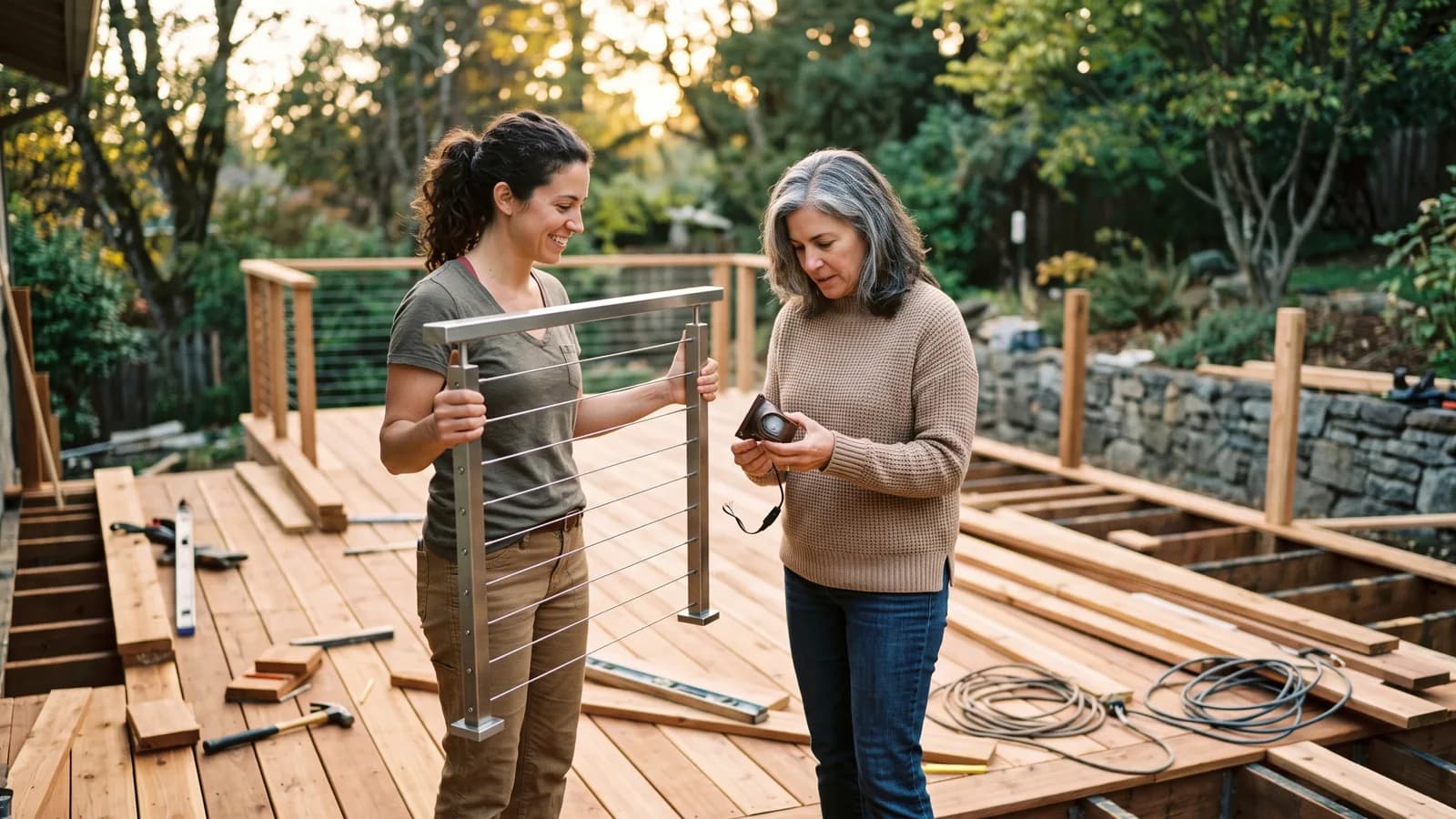
Railings, lighting, and built-in seating are not accessories on a deck, they are permanent, visible parts of the finished structure. Treated as design decisions made alongside the decking material itself, they raise a project's value naturally. Treated as a checklist of extras presented after the base price is already set, the same options read as an upsell, and homeowners resist upsells even when they would have happily chosen the exact same feature earlier in the conversation.
Why railings, lighting, and built-ins are natural upsells for decks
Decks have a distinct set of natural upgrades that most other renovation trades do not, because the structure itself has several visible, permanent components beyond the decking surface. Railing material and style, cable, glass, traditional baluster, change the entire look of a finished deck, not just its cost. Integrated post and step lighting extends how the space actually gets used, turning a daytime-only deck into one that functions for evening entertaining. Built-in benches, planters, or a small bar surface add real usable function without expanding the deck's footprint. Every one of these is a legitimate design choice a homeowner would consider on its own merits, if it were presented as one. A stair or step lighting package in particular tends to matter more for a multi-level build, where safe footing between levels after dark is a genuine practical concern rather than purely a visual upgrade.
Introducing options during design instead of after pricing
The sequencing of the consultation determines how these options land. A homeowner who is shown a base price first, then presented with a list of add-ons afterward, has already mentally anchored to a number and experiences every additional line item as a cost increase to resist. A homeowner shown railing, lighting, and built-in options as part of the same design conversation that covers decking material and layout experiences the exact same choices as part of building the deck they want, not extras bolted onto a deck they already priced out.
Railing material and style as a design decision
Railing choice should sit next to decking material choice in the consultation, not after it. A cable railing changes sightlines and reads as a more modern finished look, a traditional baluster railing suits a more classic style, and presenting these options while the homeowner is already thinking about the deck's overall look, rather than after the material decision feels settled, produces a more considered choice and a higher acceptance rate for the upgraded option. Local guard height and baluster spacing codes vary by jurisdiction on both sides of the border, which gives a contractor a natural, non-salesy reason to walk through railing options in detail rather than defaulting to whatever satisfies the minimum code requirement.
Lighting and built-in seating as usage decisions
Lighting and built-ins are best framed around how the homeowner actually intends to use the space. Asking directly, do you see yourselves out here in the evenings, entertaining a group, wanting somewhere to sit without hauling furniture out, surfaces genuine usage intent that naturally leads to a lighting package or a built-in bench as the answer, rather than presenting those items as generic options disconnected from how the homeowner actually pictures using the finished deck. A homeowner with young children, for instance, may care more about a built-in bench that keeps toys and cushions off the ground than about lighting, while a couple planning to entertain regularly may prioritize the opposite, which is exactly why this conversation works better as a question than a fixed menu.
Ask about use before offering the option
Presenting these without inflating the base estimate awkwardly
The goal is not to hide the cost of these upgrades inside a base number, it is to present them at the moment they make sense rather than as an afterthought. A clean way to do this is presenting a base estimate for the core structure alongside a short, itemized set of design upgrades discussed during the same visit, each with its own clear price, so the homeowner sees exactly what they are choosing rather than a single inflated number they cannot break down. This keeps the estimate honest while still giving every design option a fair hearing before pricing feels locked in.
How upsells connect to multi-level and premium builds
These same design decisions carry more weight on larger projects. Multi-level and rooftop decks marketed as a premium service depend even more heavily on railing, lighting, and built-in choices to justify their positioning, since the design details are often what separates a premium build from a standard one in a homeowner's eyes. These choices also set up the ongoing relationship past the build itself, since a homeowner who added lighting or a built-in feature has more reason to stay in touch about upkeep, and a well-designed deck with strong finish details is more likely to earn a referral through the landscaper and outdoor living partnerships many deck builders rely on for repeat business, since those partners are more comfortable recommending a contractor whose finished work photographs and holds up well. A landscaper referring a client into a larger, multi-level project is effectively vouching for the finished result, and strong railing and lighting details give that referral something concrete to point to.
Ready to talk numbers on your own pipeline?
On the strategy call, we'll lay out the plan we'd run for your business and talk through how it fits your market.
Final thought
Railings, lighting, and built-ins are not extras to a deck build, they are decisions the deck build already requires, whether the homeowner is guided through them deliberately or left to figure them out after the fact. Introducing these choices during the design conversation, tied to how the homeowner actually plans to use the space, produces a better finished project, a fairer estimate, and a meaningfully higher average project value than presenting the same options as a late-stage list of add-ons ever will.
Tagged