
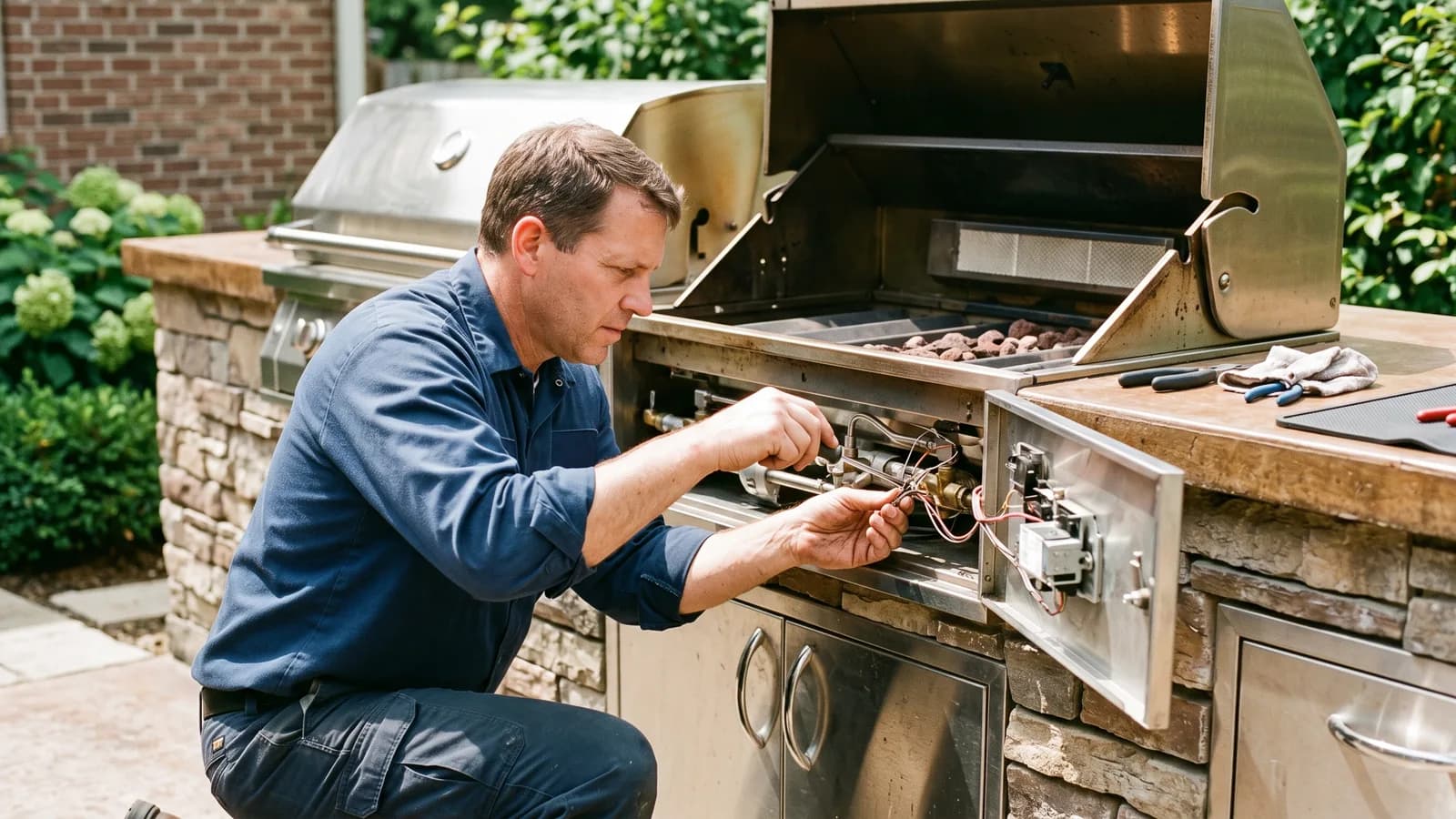
A client with a malfunctioning built-in grill does not automatically know whether that is a structural warranty issue with the island itself or an appliance manufacturer issue with the cooking unit bolted inside it. Unclear communication at handoff turns what should be a simple, routine service call into a dispute about who is responsible, and that dispute costs far more in goodwill than the actual repair ever would. Setting warranty expectations clearly, in writing, before the client ever needs to use them protects the relationship from a conflict that was entirely avoidable, and it costs almost nothing to do well compared to the goodwill a single mishandled service call can burn through.
Why warranty confusion starts at project handoff
A finished outdoor kitchen is a single visual object to the client, a countertop, cabinetry, a built-in grill and refrigeration, all sitting together as one island. Behind that unified appearance are several separate warranty relationships: the builder's own warranty on structural work and installation, the appliance manufacturers' warranties on the grill, refrigeration, and any other built-in units, and sometimes a separate warranty on countertop material depending on what was chosen. If the handoff conversation glosses over that distinction, the client is left to guess months later exactly when something stops working, and the guess is rarely the correct answer.
This confusion tends to surface at the worst possible time, months after the crew has moved on to other projects, when the client is frustrated and the details of the handoff conversation have faded. A client who calls expecting the builder to fix a manufacturer issue for free, and is told otherwise for the first time during that call, hears it as an excuse rather than an explanation, even when the builder is completely correct about where responsibility lies. The information was always true, it just was never delivered clearly enough to be remembered.
Separating structural warranty from appliance manufacturer coverage
Structural warranty covers what the builder actually built: the frame, the masonry or modular island construction, the countertop installation, and the gas and electrical connections a licensed sub-trade completed. Appliance manufacturer coverage handles what that manufacturer builds and sells, the grill, the burner components, a built-in refrigeration unit, regardless of who installed it. A cracked countertop is almost always a structural issue. Weather-rated cabinetry that warps or discolors might fall under either category depending on whether the cause was a material defect or an installation error, which is exactly the kind of case that needs a documented process rather than a judgment call made on the spot during a stressful phone call.
What to put in writing before the final walkthrough
The final walkthrough is the natural moment to hand the client a short, plain-language warranty summary rather than relying on contract language buried in a longer document. That summary should name what the builder covers directly, for how long, and list each appliance with its manufacturer and the manufacturer's own warranty period and registration steps, since many manufacturer warranties require the client to register the product themselves within a set window after installation. Handing this over as a single reference sheet, rather than expecting a client to piece it together from a stack of appliance manuals, is a small effort that prevents a disproportionate number of future disputes. Walking through that summary out loud during the final walkthrough, rather than simply attaching it to an email the client may not open for weeks, gives the client a chance to ask questions while the builder is still standing there to answer them.
Registration deadlines are the client's job, not the builder's
Training the team to route calls to the right party
Whoever answers a service call needs to be able to tell quickly whether an issue sounds structural or appliance-related, and route it accordingly rather than defaulting every call to a full site visit. A grill that will not ignite is almost certainly a manufacturer issue the client should raise with that appliance company directly, while a gap opening between a countertop and the island frame is a builder issue that needs a technician on site. A short internal reference guide, mirroring the client-facing warranty summary, keeps this routing consistent regardless of who happens to take the call.
This matters just as much across the border distinction as it does within a single company. A builder working near a jurisdiction line in the United States, or across provinces in Canada, may see appliance models sold under slightly different names or with different regional warranty administrators, and the internal guide should note those variations rather than assuming every unit routes to the same manufacturer contact regardless of where it was purchased or installed.
Turning service calls into a maintenance revenue relationship
Even issues that fall under a manufacturer's warranty create an opportunity to stay connected to the client. Offering a seasonal maintenance check, cleaning burner components, inspecting connections, checking weather-rated cabinetry for wear before the next season starts, turns a purely reactive warranty relationship into an ongoing one. The same milestone thinking that shapes review requests applies here, a well-timed maintenance offer lands better right before the busy entertaining season than as a generic year-round upsell, and it keeps service capacity balanced against new project volume rather than treated as an afterthought squeezed in between builds.
Ready to talk numbers on your own pipeline?
On the strategy call, we'll lay out the plan we'd run for your business and talk through how it fits your market.
Final thought
Warranty confusion is rarely about coverage that does not exist, it is about coverage the client never understood clearly enough to use correctly. Separating structural and appliance manufacturer coverage in writing at handoff, training the team to route calls accordingly, and using service touchpoints to deepen the relationship instead of just resolving a complaint turns warranty communication from a liability into a quiet source of trust.
Tagged