
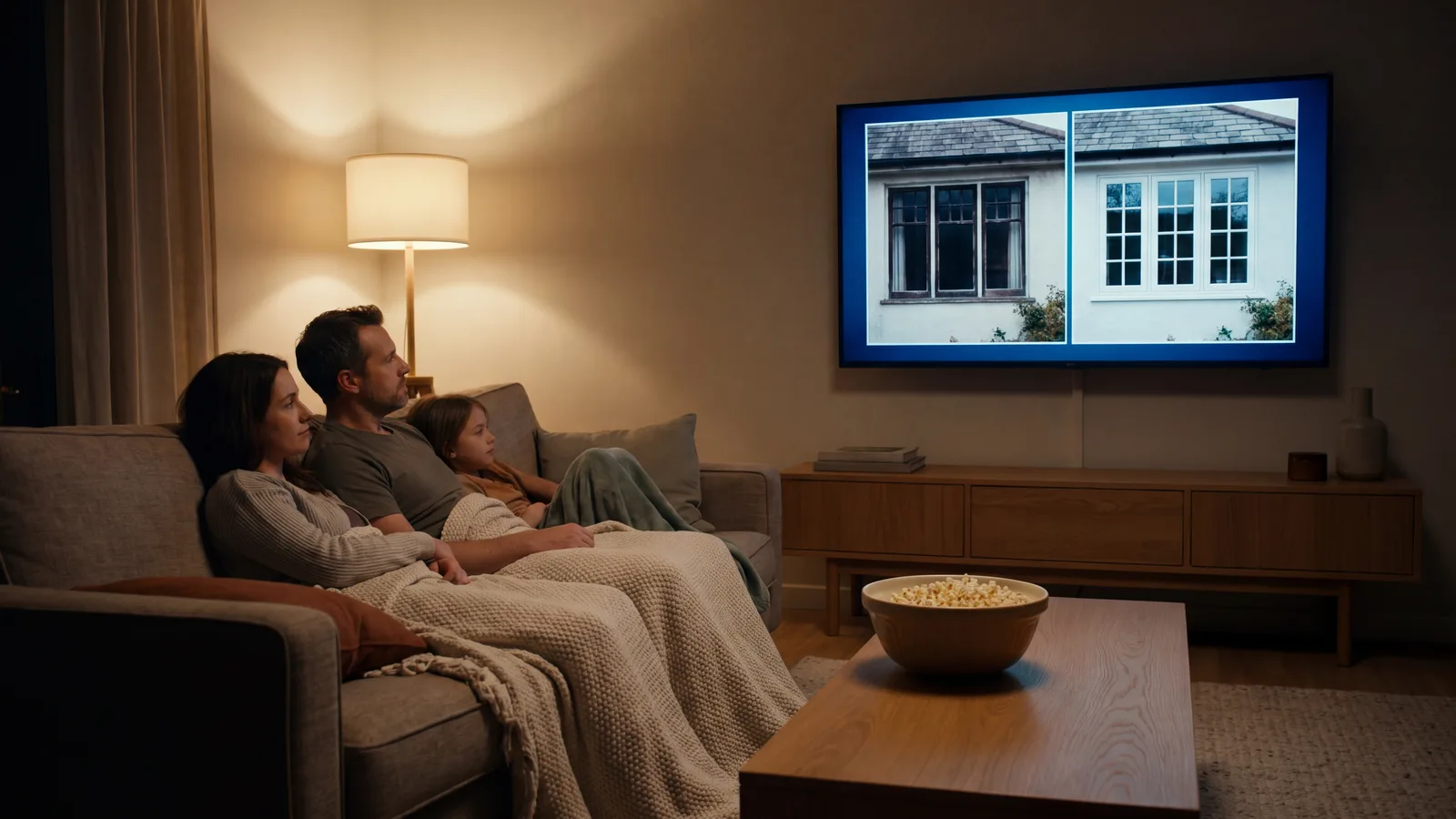
YouTube is the most consistently under-utilized paid channel in residential window contractor marketing. Most agencies skip it, production feels intimidating, the targeting feels unfamiliar, and the conversion attribution looks fuzzy. In the accounts we have run it in, the channel earns its place by building a warm retargeting pool cheaply rather than by closing cold traffic directly. That is our experience, not a cross-account study, and the only cost-per-signed-job comparison that means anything is the one inside your own account.
Why YouTube works for window replacement specifically
Three structural reasons:
1. Demonstration is half the sale
Window replacement is a visual product. Showing a thermal camera image of an old single-pane window vs. a modern triple-pane, the install process, the trim work, these communicate value in seconds in ways static photos and text ads can't. YouTube is the only channel where the creative format matches the product's buying drivers.
2. The audience is sitting still
Meta and Google Search compete for thumb-flick attention. YouTube competes for sit-down attention. A homeowner part-way through a renovation show is in a different cognitive state than a homeowner thumbing through a social feed. Your ad lands with a different impact.
3. Targeting depth is dramatically undervalued
Google's YouTube targeting includes: in-market for home improvement, life events (just bought a home, recently moved), affinity (DIY enthusiasts, home decor), custom-intent based on search behavior, and demographic combinations. That is a deep enough toolkit to build the same kind of audience you would build on Meta, and our working assumption is that the auction is thinner because fewer direct-response advertisers are bidding into it. Check your own cost per thousand impressions against your other channels rather than taking that on faith.
The auction-density argument
The three creative formats that work
1. Skippable in-stream ads
Pre-roll ads on YouTube videos. The viewer can skip after 5 seconds. Per Google's own documentation you pay when a viewer watches 30 seconds of the video, or the whole video if it runs shorter than 30 seconds, or interacts with it, whichever comes first. This format rewards a strong first 5 seconds. For window contractors, the high-performing pattern is: pain hook (drafty windows in winter, condensation, energy bills) → rapid value-prop → CTA. Length: 60-90 seconds for prospecting, 30 seconds for retargeting.
2. Bumper ads (5 to 6 seconds)
Non-skippable short branding ads, between 5 and 6 seconds, bought on a cost-per-thousand-impressions basis. Useful for retargeting and reinforcement, not for cold conversion. Best used as part of a broader video campaign, bumper ads shown to viewers who've seen your longer creative.
3. In-feed video ads
Show up in YouTube search results and the “watch next” sidebar. Click-through to a longer-form video. Useful for driving people from category-search behavior (“window replacement reviews”) into your content.
The creative that actually converts for window contractors
Production quality matters less than message quality. A cheap video shot on a current phone in good lighting, with a clear narrative arc, will generally beat an expensively produced one with no story. Spend the difference on media.
The narrative pattern that works:
- Hook (0-5 seconds): Visceral pain or intrigue, and defensible. The Department of Energy puts heat gain and heat loss through windows at 25% to 30% of residential heating and cooling energy use, which is a figure you can say out loud. What that is worth in dollars depends on the house and the fuel, so don't put a dollar number in a hook you can't support.
- Authority (5-15 seconds): Brief credential. “We've installed over X,000 windows across [your metro] since [year].”
- Demonstration (15-50 seconds): Show the actual install. Real customers, real homes, real time-lapse. This is the heart of the video.
- Proof (50-70 seconds): One customer testimonial. Real homeowner, on-camera, named, neighborhood context.
- CTA (70-90 seconds): “Book a free strategy call. We come out, measure, give you a written diagnosis, yours to keep, no commitment.”
Targeting that performs
For a residential window and door contractor, the high-performing targeting stack:
- Geographic: radius around your service area, plus specific ZIP-code targeting for higher-income neighborhoods within that radius.
- In-market for home improvement: Google's inferred-intent audience based on cross-platform search behavior.
- Custom intent, keyword-based: homeowners who've recently searched “window replacement,” “double-hung windows,” “low-e windows,” or brand-versus-brand comparisons.
- Affinity, DIY home improvement: people who watch home renovation content regularly. Lower conversion but builds retargeting pool cheaply.
- Demographic overlay: homeowners, household income $75K+, age 35-65.
The pixel-stacking discipline
Budget and bid strategy
For a contractor allocating $5K-$10K/mo across paid channels, a YouTube starting allocation:
10-20%
The YouTube share of total paid budget we start a residential window contractor on when they enter the channel. Our allocation, not an industry benchmark. Lower at the start while you learn what creative works; higher as the funnel matures and the retargeting pool builds.
Bid strategy: target CPV (cost per view) bidding for prospecting; move to target CPA bidding for direct-response campaigns only once the account has a real conversion history behind it. Automated bidding on a fresh account is bidding with no signal, and it will spend your budget learning what you could have taught it more cheaply.
How YouTube fits the broader channel mix
YouTube isn't a primary direct-response channel for most contractors, it's a top-of-funnel awareness + retargeting-pool builder that compounds the performance of Meta and Google Search. See the channel mix breakdown. Pair YouTube with disciplined retargeting (covered here) and the audiences YouTube builds become some of your cheapest signed jobs 30-60 days later.
The mistakes that kill YouTube performance
1. Over-investing in production
$10K+ video productions don't outperform $500 honest productions for direct-response. Spend the budget on the media spend, not the creative.
2. No first-5-seconds discipline
Skippable in-stream ads can be skipped at 5 seconds. A weak hook means most of your impressions are skipped before the billable threshold, which reads as cheap delivery and produces nothing. Test first-5-seconds variants ruthlessly.
3. Wrong call-to-action
Don't ask cold YouTube viewers to book a strategy call. Ask them to download a free guide, watch a longer video, or visit a low-friction landing page first. Cold video traffic asked for a high-commitment action converts well below warm search or retargeting traffic, which is the whole reason to treat the channel as a pool-builder.
4. No retargeting follow-up
YouTube's biggest leverage is the audience it builds. Skipping the retargeting layer wastes the channel's primary value.
Sources
- Google Ads Help, about video ad formats, the source for the 5-second skip on skippable in-stream ads, the billing trigger at 30 seconds or the full video or an interaction, and the 5-to-6-second length of bumper ads.
- U.S. Department of Energy, home upgrades, the source for heat gain and heat loss through windows accounting for 25% to 30% of residential heating and cooling energy use.
Ready to talk numbers on your own pipeline?
On the strategy call, we'll lay out the plan we'd run for your business and talk through how it fits your market.
Final thought
YouTube isn't the highest-converting channel a contractor can run, but it's consistently the most under-priced relative to its audience-targeting capability. For window replacement specifically, a visual product, a long consideration cycle, a captive-attention audience, YouTube produces effective top-of-funnel and warming engagement at cost-per-thousand impressions other channels can't match. Add it as a 10-20% allocation, treat retargeting as the conversion path, and the channel rewards consistency over time.
Tagged